
We built a job portal that updates itself every day
By Sara · · 4 min read
tnjobs.site is a Tamil Nadu jobs and news site that Digitalgrub built and now runs. Twice a day it takes in the newest vacancies, sorts them by city and by the kind of work, rebuilds every page, and publishes a Tamil news article. Nobody logs in. Nobody presses publish.
It costs less than a rupee a day to keep running.
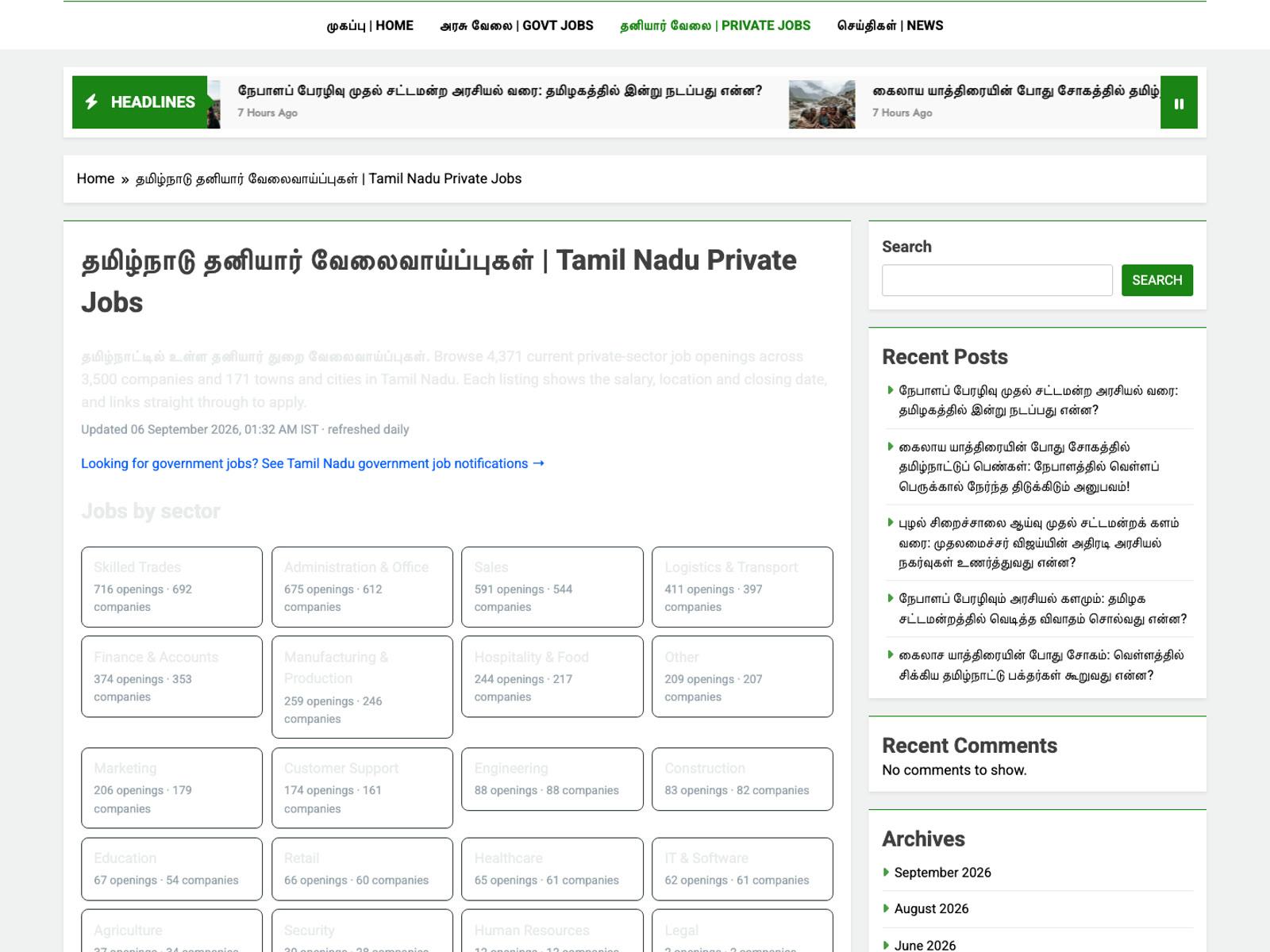
4,371
open jobs listed
3,069
showing real pay
26
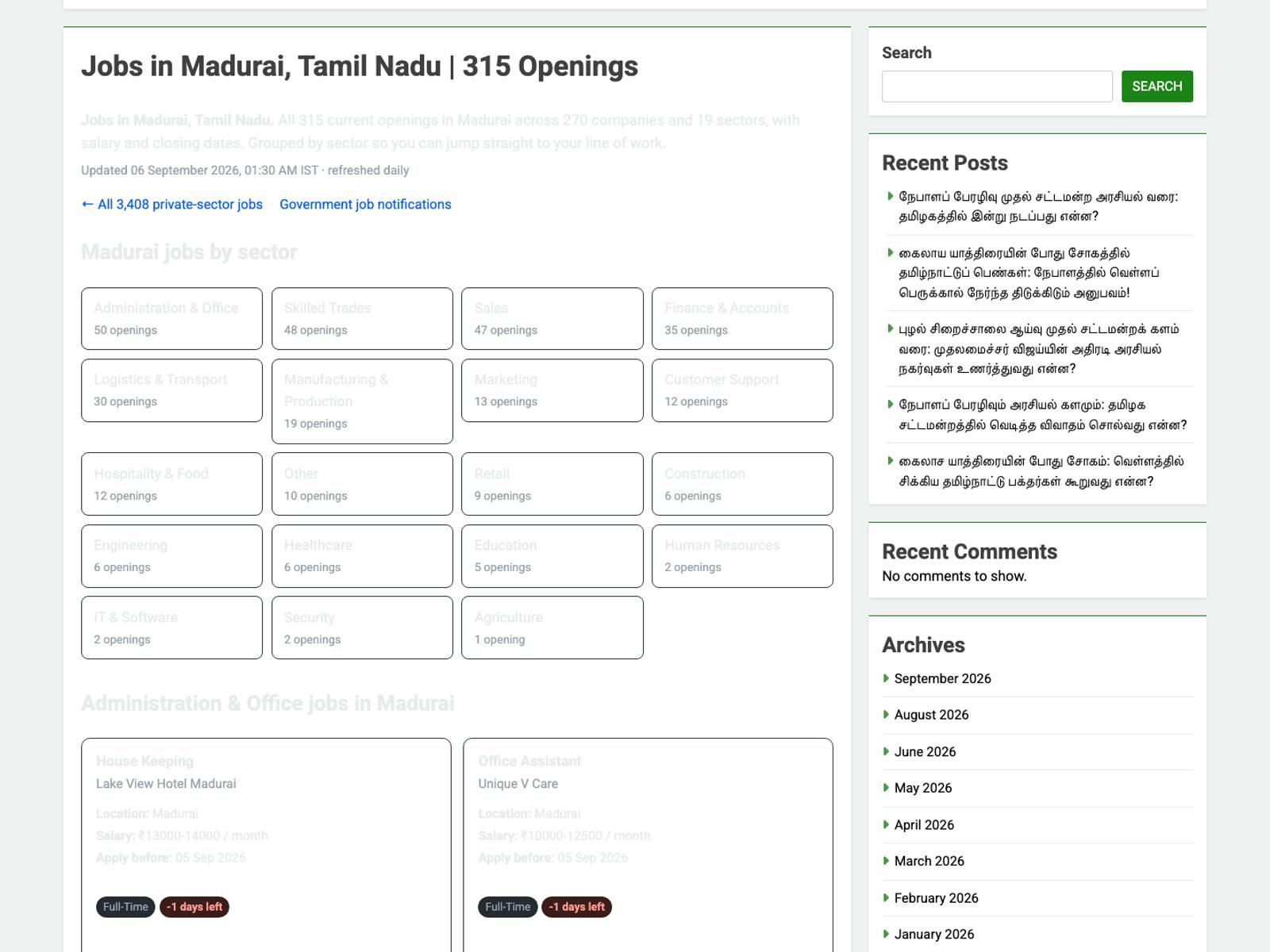
city pages
20
job sectors
The problem worth solving
Tamil Nadu is not short of job listings. It is short of order. Someone in Karur looking for accounts work has to check a handful of sites, each laid out differently, none of which answers the two questions that actually decide whether to apply: is this near me, and what does it pay. Government notifications sit somewhere else again.
Everything needed to answer both questions is already in the listings. It is just never organised, because organising it is dull, repetitive work that would have to be done every single day, forever. That is exactly the kind of job worth handing to a machine.
What is on it
- A page for each of 26 cities — Chennai, Coimbatore, Madurai, Salem, Erode, Tiruppur and the rest — so you can look at your own town first instead of scrolling past the whole state.
- Twenty sectors, from skilled trades and driving to accounts, sales, healthcare and IT. Every listing is filed into one, so browsing by the kind of work you do actually works.
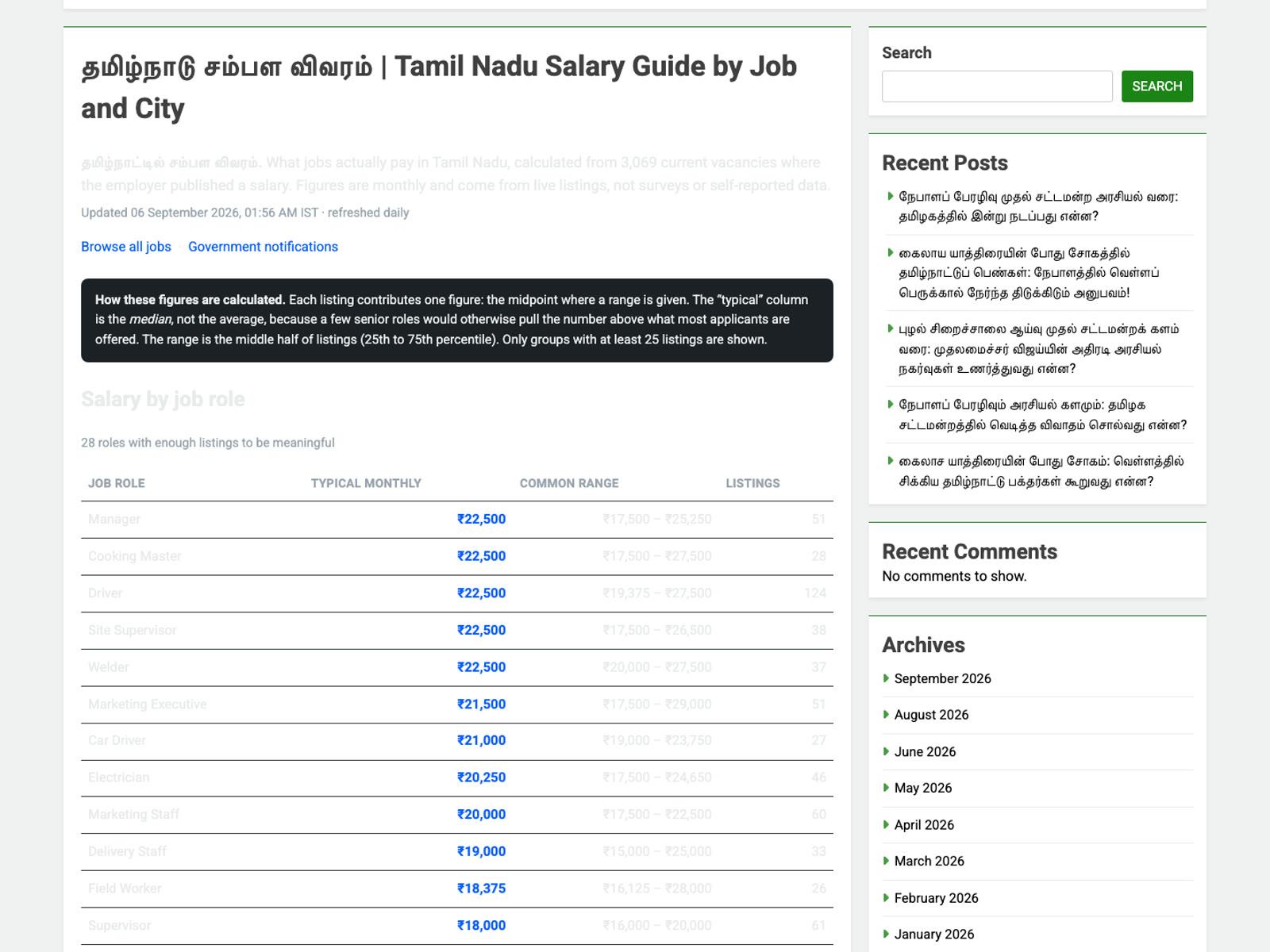
- A salary guide showing what each role typically pays, and the range most offers fall inside — built only from listings where the employer published a figure.
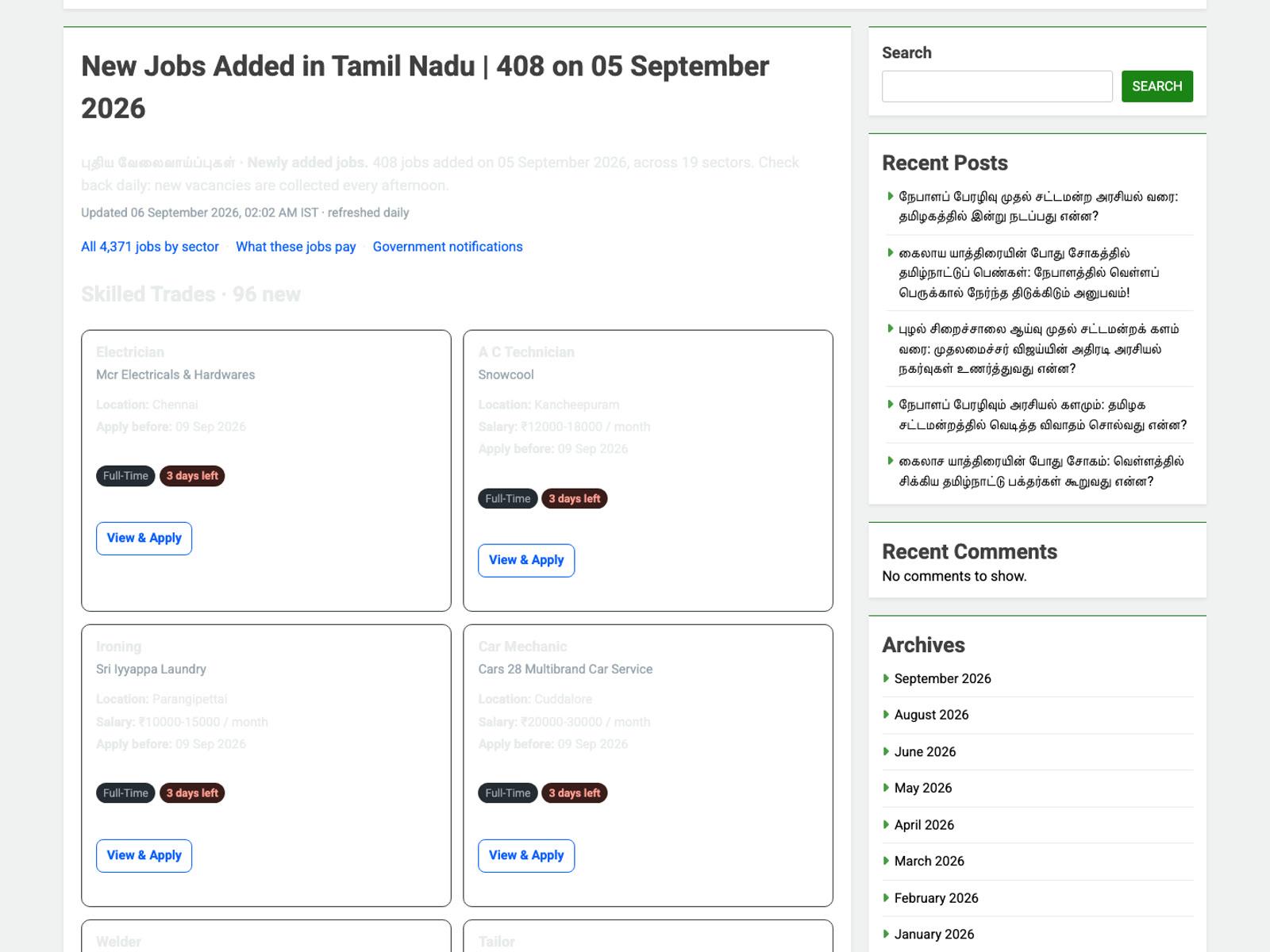
- A jobs-added-today page, so anyone checking daily sees only what is new. On the last refresh that was 408 vacancies, which is an ordinary day.
Why the salary figures can be trusted
The pay figures are the most useful thing on the site, so they are also the part we were strictest about.
Each role shows the typical salary rather than the average. A handful of senior posts at ₹60,000 would drag an average well above anything an ordinary applicant is offered — correct arithmetic, misleading advice. The range shown is where the middle half of offers sit, not the lowest and highest, because the lowest and highest are decided by two unusual listings and tell a reader nothing.
If there is not enough data, we publish nothing.
No pay figure appears unless at least 25 real listings sit behind it. An average salary worked out from two vacancies is not a statistic, it is a guess with a number attached. The same rule applies to towns: a place gets its own page only when it has enough jobs to be worth opening, which is why there are 26 city pages and not 171 thin ones.
The point of building it this way
A site like this would normally need somebody on it every morning: collecting, sorting, checking, publishing. That person would be doing the same thing on day two hundred as on day one. Handing it over means the listings are never a week stale, the salary guide moves as the market moves, and the running cost is a few rupees rather than a salary.
It also has to be worth trusting while nobody is watching, which is the harder half. Most of the work went into the checks — confirming each day's update actually happened, and refusing to publish anything that is not backed by enough real listings.
Working with us
Digitalgrub builds this kind of thing for businesses: work that repeats every day, handed to a system that does it on its own, with the checks that make leaving it alone a reasonable decision rather than a gamble. If you have a job that is repetitive, daily and endless, that is the shape we are looking for.